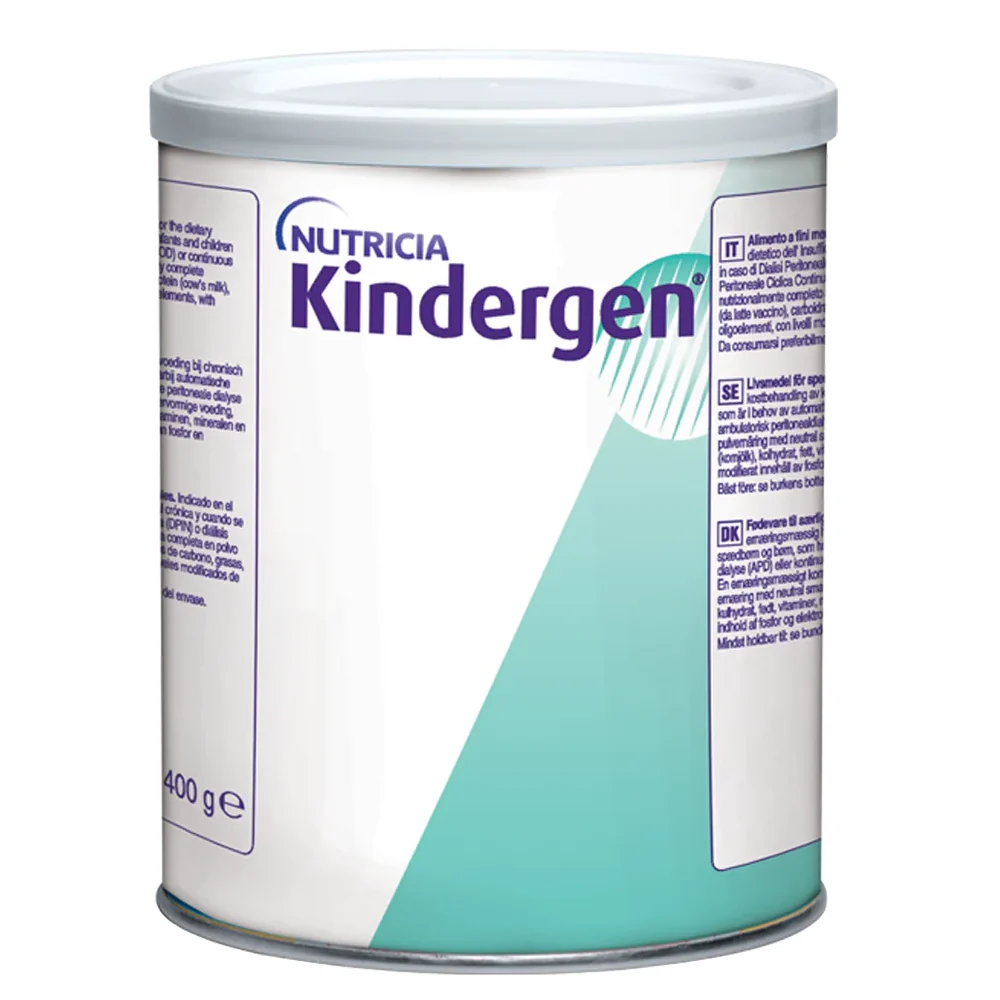
Nutricia Kindergen, 400g (152140) - Box of 6
A nutritionally complete powdered feed for infants and children with chronic renal failure.
Features:
- 1kcal/ml (20% w/v concentration).
- 1.5g protein per 100ml (20% w/v)
- Low in potassium, chloride, calcium, phosphorus and vitamin A.
- Contains whey protein, carbohydrate, fat, vitamins, minerals and trace elements.
- Potential renal solute load: 235 mOsm/L.
- Unflavoured.
Important Notice:
- Due to the low potassium, chloride, calcium, phosphorus and vitamin A content in this product, which may be required in chronic renal failure, levels should be monitored and individual nutrients be supplemented if required.
- Powdered infant formula is not sterile. Infant formula should be prepared immediately prior to feeding.
- Not for parenteral use.
- Professional advice should be followed before using an infant formula. Introducing partial bottle feeding could negatively affect breastfeeding. Good maternal nutrition is important for breastfeeding and reversing a decision not to breastfeed may be difficult. Infant formula should be used as directed. Proper use of an infant formula is important to the health of the infant. Social and financial implications such as preparation requirements and the cost of providing formula up to the age of 12 months should be considered when selecting a method of feeding.
- Additional water may need to be given to ensure adequate fluid intake.
- Must be used under medical supervision.
- Suitable as a sole source of nutrition for infants under 1 year of age and as a supplement for young children.
Direction of Use:
- The quantity of feed should be determined by a clinician or dietitian only and is dependent on the age, bodyweight and medical condition of the patient.
- Follow preparation instructions as stated on the can.
- Four level scoops (20g) of Kindergen requires 84ml of water to yield the recommended feed concentration (20% w/v). A lower concentration may initially be required until recommended concentration is tolerated.
Storage:
- Store can in a cool, dry place.
- Always replace the container lid after use.
- Once can is opened, use within one month.
Indications:
- Kindergen can be used as a sole source of nutrition or as a supplementary feed for the dietary management of infants and children with chronic renal failure and where peritoneal rapid overnight dialysis (PROD) or continuous cycling peritoneal dialysis (CCPD) is required.
- Suitable as a sole source of nutrition for infants and as a supplementary feed for young children over 1 year of age.
Nutritional Information:
| Average contents | Per 100g | Per 100ml* |
|
NUTRITION INFORMATION
|
||
| Energy | 498 kcal | 100 kcal |
| 2083 kJ | 418 kJ | |
| Protein | 7.5 g | 1.5 g |
| Carbohydrate | 57.6 g | 11.6 g |
| Sugars | 8 g | 1.6 g |
| as Lactose | 1.99 g | 0.40 g |
| Fat | 25.9 g | 5.2 g |
| Saturates | 9.1 g | 1.8 g |
| Monounsaturates | 12.3 g | 2.5 g |
| Polyunsaturates | 4.3 g | 0.85 g |
| ω6 / ω3 ratio | 7.2:1 | |
| Fibre | 2.8 g | 0.56 g |
| MINERALS | ||
| Sodium | 230 mg | 46.1 mg |
| 9.98 mmol | 2.00 mmol | |
| Potassium | 119 mg | 23.9 mg |
| 3.04 mmol | 0.61 mmol | |
| Calcium | 229 mg | 46 mg |
| Phosphorus | 115 mg | 23 mg |
| Magnesium | 54.3 mg | 10.9 mg |
| Chloride | 84.1 mg | 16.9 mg |
| Ca:P ratio | 2:1 | |
| VITAMINS | ||
| Vitamin A | 128 μg-RE | 25.8 μg-RE |
| Vitamin D | 11.9 μg | 2.4 μg |
| Vitamin E | 9.01 mg-α-T.E | 1.81 mg-α-T.E |
| Vitamin K | 33.4 μg | 6.7 μg |
| Vitamin C | 66.2 mg | 13.3 mg |
| Thiamin | 0.75 mg | 0.15 mg |
| Riboflavin | 1.00 mg | 0.20 mg |
| Niacin | 7.52 mg NE | 1.51 mg NE |
| Vitamin B6 | 0.53 mg | 0.11 mg |
| Vitamin B12 | 1.00 μg | 0.20 μg |
| Folic Acid | 83.7 μg | 16.8 μg |
| Pantothenic Acid | 3.98 mg | 0.80 mg |
| Biotin | 18.9 μg | 3.80 μg |
| TRACE ELEMENTS | ||
| Iron | 7.47 mg | 1.50 mg |
| Zinc | 4.13 mg | 0.83 mg |
| Manganese | 0.05 mg | 0.01 mg |
| Copper | 0.37 mg | 0.075 mg |
| Iodine | 94.6 μg | 19.0 μg |
| Molybdenum | 12.0 μg | 2.41 μg |
| Selenium | 12.9 μg | 2.60 μg |
| Chromium | 5.91 μg | 1.19 μg |
| OTHER | ||
| Choline | 156 mg | 31.3 mg |
| Inositol | 124 mg | 25 mg |
| Osmolality | 280 mOsmol/kgH₂O | |
| Chromium | 5.3 μg | 26.5 μg |
| Flouride | 0.11 mg | 0.55 mg |
| OTHER | ||
| Carotenoids | 0.15 mg | 0.75 mg |
| Choline | 30 mg | 150 mg |
| L-Carnitine | 3 mg | 15 mg |
| Taurine | 11 mg | 55 mg |
| Osmolality | 390 mOsmol/kgH₂O | 390 mOsmol/kgH₂O |
| Osmolality | 510 mOsm/kgH₂O | 510 mOsm/kgH₂O |
Ingredients:
Glucose syrup, vegetable oils (sunflower oil, coconut oil (soy), rapeseed oil), whey protein (from cow’s milk), galacto-oligosaccharides (from cow’s milk), maltodextrin, sodium citrate, fish oil, calcium phosphate, fructo-oligosaccharides, magnesium citrate, choline chloride, L-tyrosine, L-phenylalanine, oil from Morteriella Alpina, inositol, L-leucine, potassium citrate, L-histidine, calcium carbonate, L-valine, emulsifier (sunflower lecithin), L-isoleucine, L-ascorbic acid, sodium L-ascorbate, taurine, ferrous sulphate, L-tryptophan, L-cystine, sodium chloride, zinc sulphate, L-carnitine, nicotinamide, calcium D-pantothenate, copper sulphate, sucrose, thiamin hydrochloride, riboflavin, pyridoxine hydrochloride, DL-alpha tocopherol, DL-alpha tocopheryl acetate, retinyl palmitate, manganese sulphate, pteroylmonoglutamic acid, potassium iodide, phytomenadione, sodium selenite, D-biotin, cholecalciferol, cyanocobalamin.
A nutritionally complete powdered feed for infants and children with chronic renal failure.
Features:
- 1kcal/ml (20% w/v concentration).
- 1.5g protein per 100ml (20% w/v)
- Low in potassium, chloride, calcium, phosphorus and vitamin A.
- Contains whey protein, carbohydrate, fat, vitamins, minerals and trace elements.
- Potential renal solute load: 235 mOsm/L.
- Unflavoured.
Important Notice:
- Due to the low potassium, chloride, calcium, phosphorus and vitamin A content in this product, which may be required in chronic renal failure, levels should be monitored and individual nutrients be supplemented if required.
- Powdered infant formula is not sterile. Infant formula should be prepared immediately prior to feeding.
- Not for parenteral use.
- Professional advice should be followed before using an infant formula. Introducing partial bottle feeding could negatively affect breastfeeding. Good maternal nutrition is important for breastfeeding and reversing a decision not to breastfeed may be difficult. Infant formula should be used as directed. Proper use of an infant formula is important to the health of the infant. Social and financial implications such as preparation requirements and the cost of providing formula up to the age of 12 months should be considered when selecting a method of feeding.
- Additional water may need to be given to ensure adequate fluid intake.
- Must be used under medical supervision.
- Suitable as a sole source of nutrition for infants under 1 year of age and as a supplement for young children.
Direction of Use:
- The quantity of feed should be determined by a clinician or dietitian only and is dependent on the age, bodyweight and medical condition of the patient.
- Follow preparation instructions as stated on the can.
- Four level scoops (20g) of Kindergen requires 84ml of water to yield the recommended feed concentration (20% w/v). A lower concentration may initially be required until recommended concentration is tolerated.
Storage:
- Store can in a cool, dry place.
- Always replace the container lid after use.
- Once can is opened, use within one month.
Indications:
- Kindergen can be used as a sole source of nutrition or as a supplementary feed for the dietary management of infants and children with chronic renal failure and where peritoneal rapid overnight dialysis (PROD) or continuous cycling peritoneal dialysis (CCPD) is required.
- Suitable as a sole source of nutrition for infants and as a supplementary feed for young children over 1 year of age.
Nutritional Information:
| Average contents | Per 100g | Per 100ml* |
|
NUTRITION INFORMATION
|
||
| Energy | 498 kcal | 100 kcal |
| 2083 kJ | 418 kJ | |
| Protein | 7.5 g | 1.5 g |
| Carbohydrate | 57.6 g | 11.6 g |
| Sugars | 8 g | 1.6 g |
| as Lactose | 1.99 g | 0.40 g |
| Fat | 25.9 g | 5.2 g |
| Saturates | 9.1 g | 1.8 g |
| Monounsaturates | 12.3 g | 2.5 g |
| Polyunsaturates | 4.3 g | 0.85 g |
| ω6 / ω3 ratio | 7.2:1 | |
| Fibre | 2.8 g | 0.56 g |
| MINERALS | ||
| Sodium | 230 mg | 46.1 mg |
| 9.98 mmol | 2.00 mmol | |
| Potassium | 119 mg | 23.9 mg |
| 3.04 mmol | 0.61 mmol | |
| Calcium | 229 mg | 46 mg |
| Phosphorus | 115 mg | 23 mg |
| Magnesium | 54.3 mg | 10.9 mg |
| Chloride | 84.1 mg | 16.9 mg |
| Ca:P ratio | 2:1 | |
| VITAMINS | ||
| Vitamin A | 128 μg-RE | 25.8 μg-RE |
| Vitamin D | 11.9 μg | 2.4 μg |
| Vitamin E | 9.01 mg-α-T.E | 1.81 mg-α-T.E |
| Vitamin K | 33.4 μg | 6.7 μg |
| Vitamin C | 66.2 mg | 13.3 mg |
| Thiamin | 0.75 mg | 0.15 mg |
| Riboflavin | 1.00 mg | 0.20 mg |
| Niacin | 7.52 mg NE | 1.51 mg NE |
| Vitamin B6 | 0.53 mg | 0.11 mg |
| Vitamin B12 | 1.00 μg | 0.20 μg |
| Folic Acid | 83.7 μg | 16.8 μg |
| Pantothenic Acid | 3.98 mg | 0.80 mg |
| Biotin | 18.9 μg | 3.80 μg |
| TRACE ELEMENTS | ||
| Iron | 7.47 mg | 1.50 mg |
| Zinc | 4.13 mg | 0.83 mg |
| Manganese | 0.05 mg | 0.01 mg |
| Copper | 0.37 mg | 0.075 mg |
| Iodine | 94.6 μg | 19.0 μg |
| Molybdenum | 12.0 μg | 2.41 μg |
| Selenium | 12.9 μg | 2.60 μg |
| Chromium | 5.91 μg | 1.19 μg |
| OTHER | ||
| Choline | 156 mg | 31.3 mg |
| Inositol | 124 mg | 25 mg |
| Osmolality | 280 mOsmol/kgH₂O | |
| Chromium | 5.3 μg | 26.5 μg |
| Flouride | 0.11 mg | 0.55 mg |
| OTHER | ||
| Carotenoids | 0.15 mg | 0.75 mg |
| Choline | 30 mg | 150 mg |
| L-Carnitine | 3 mg | 15 mg |
| Taurine | 11 mg | 55 mg |
| Osmolality | 390 mOsmol/kgH₂O | 390 mOsmol/kgH₂O |
| Osmolality | 510 mOsm/kgH₂O | 510 mOsm/kgH₂O |
Ingredients:
Glucose syrup, vegetable oils (sunflower oil, coconut oil (soy), rapeseed oil), whey protein (from cow’s milk), galacto-oligosaccharides (from cow’s milk), maltodextrin, sodium citrate, fish oil, calcium phosphate, fructo-oligosaccharides, magnesium citrate, choline chloride, L-tyrosine, L-phenylalanine, oil from Morteriella Alpina, inositol, L-leucine, potassium citrate, L-histidine, calcium carbonate, L-valine, emulsifier (sunflower lecithin), L-isoleucine, L-ascorbic acid, sodium L-ascorbate, taurine, ferrous sulphate, L-tryptophan, L-cystine, sodium chloride, zinc sulphate, L-carnitine, nicotinamide, calcium D-pantothenate, copper sulphate, sucrose, thiamin hydrochloride, riboflavin, pyridoxine hydrochloride, DL-alpha tocopherol, DL-alpha tocopheryl acetate, retinyl palmitate, manganese sulphate, pteroylmonoglutamic acid, potassium iodide, phytomenadione, sodium selenite, D-biotin, cholecalciferol, cyanocobalamin.
$118.58
Original: $338.79
-65%Nutricia Kindergen, 400g (152140) - Box of 6—
$338.79
$118.58Description
A nutritionally complete powdered feed for infants and children with chronic renal failure.
Features:
- 1kcal/ml (20% w/v concentration).
- 1.5g protein per 100ml (20% w/v)
- Low in potassium, chloride, calcium, phosphorus and vitamin A.
- Contains whey protein, carbohydrate, fat, vitamins, minerals and trace elements.
- Potential renal solute load: 235 mOsm/L.
- Unflavoured.
Important Notice:
- Due to the low potassium, chloride, calcium, phosphorus and vitamin A content in this product, which may be required in chronic renal failure, levels should be monitored and individual nutrients be supplemented if required.
- Powdered infant formula is not sterile. Infant formula should be prepared immediately prior to feeding.
- Not for parenteral use.
- Professional advice should be followed before using an infant formula. Introducing partial bottle feeding could negatively affect breastfeeding. Good maternal nutrition is important for breastfeeding and reversing a decision not to breastfeed may be difficult. Infant formula should be used as directed. Proper use of an infant formula is important to the health of the infant. Social and financial implications such as preparation requirements and the cost of providing formula up to the age of 12 months should be considered when selecting a method of feeding.
- Additional water may need to be given to ensure adequate fluid intake.
- Must be used under medical supervision.
- Suitable as a sole source of nutrition for infants under 1 year of age and as a supplement for young children.
Direction of Use:
- The quantity of feed should be determined by a clinician or dietitian only and is dependent on the age, bodyweight and medical condition of the patient.
- Follow preparation instructions as stated on the can.
- Four level scoops (20g) of Kindergen requires 84ml of water to yield the recommended feed concentration (20% w/v). A lower concentration may initially be required until recommended concentration is tolerated.
Storage:
- Store can in a cool, dry place.
- Always replace the container lid after use.
- Once can is opened, use within one month.
Indications:
- Kindergen can be used as a sole source of nutrition or as a supplementary feed for the dietary management of infants and children with chronic renal failure and where peritoneal rapid overnight dialysis (PROD) or continuous cycling peritoneal dialysis (CCPD) is required.
- Suitable as a sole source of nutrition for infants and as a supplementary feed for young children over 1 year of age.
Nutritional Information:
| Average contents | Per 100g | Per 100ml* |
|
NUTRITION INFORMATION
|
||
| Energy | 498 kcal | 100 kcal |
| 2083 kJ | 418 kJ | |
| Protein | 7.5 g | 1.5 g |
| Carbohydrate | 57.6 g | 11.6 g |
| Sugars | 8 g | 1.6 g |
| as Lactose | 1.99 g | 0.40 g |
| Fat | 25.9 g | 5.2 g |
| Saturates | 9.1 g | 1.8 g |
| Monounsaturates | 12.3 g | 2.5 g |
| Polyunsaturates | 4.3 g | 0.85 g |
| ω6 / ω3 ratio | 7.2:1 | |
| Fibre | 2.8 g | 0.56 g |
| MINERALS | ||
| Sodium | 230 mg | 46.1 mg |
| 9.98 mmol | 2.00 mmol | |
| Potassium | 119 mg | 23.9 mg |
| 3.04 mmol | 0.61 mmol | |
| Calcium | 229 mg | 46 mg |
| Phosphorus | 115 mg | 23 mg |
| Magnesium | 54.3 mg | 10.9 mg |
| Chloride | 84.1 mg | 16.9 mg |
| Ca:P ratio | 2:1 | |
| VITAMINS | ||
| Vitamin A | 128 μg-RE | 25.8 μg-RE |
| Vitamin D | 11.9 μg | 2.4 μg |
| Vitamin E | 9.01 mg-α-T.E | 1.81 mg-α-T.E |
| Vitamin K | 33.4 μg | 6.7 μg |
| Vitamin C | 66.2 mg | 13.3 mg |
| Thiamin | 0.75 mg | 0.15 mg |
| Riboflavin | 1.00 mg | 0.20 mg |
| Niacin | 7.52 mg NE | 1.51 mg NE |
| Vitamin B6 | 0.53 mg | 0.11 mg |
| Vitamin B12 | 1.00 μg | 0.20 μg |
| Folic Acid | 83.7 μg | 16.8 μg |
| Pantothenic Acid | 3.98 mg | 0.80 mg |
| Biotin | 18.9 μg | 3.80 μg |
| TRACE ELEMENTS | ||
| Iron | 7.47 mg | 1.50 mg |
| Zinc | 4.13 mg | 0.83 mg |
| Manganese | 0.05 mg | 0.01 mg |
| Copper | 0.37 mg | 0.075 mg |
| Iodine | 94.6 μg | 19.0 μg |
| Molybdenum | 12.0 μg | 2.41 μg |
| Selenium | 12.9 μg | 2.60 μg |
| Chromium | 5.91 μg | 1.19 μg |
| OTHER | ||
| Choline | 156 mg | 31.3 mg |
| Inositol | 124 mg | 25 mg |
| Osmolality | 280 mOsmol/kgH₂O | |
| Chromium | 5.3 μg | 26.5 μg |
| Flouride | 0.11 mg | 0.55 mg |
| OTHER | ||
| Carotenoids | 0.15 mg | 0.75 mg |
| Choline | 30 mg | 150 mg |
| L-Carnitine | 3 mg | 15 mg |
| Taurine | 11 mg | 55 mg |
| Osmolality | 390 mOsmol/kgH₂O | 390 mOsmol/kgH₂O |
| Osmolality | 510 mOsm/kgH₂O | 510 mOsm/kgH₂O |
Ingredients:
Glucose syrup, vegetable oils (sunflower oil, coconut oil (soy), rapeseed oil), whey protein (from cow’s milk), galacto-oligosaccharides (from cow’s milk), maltodextrin, sodium citrate, fish oil, calcium phosphate, fructo-oligosaccharides, magnesium citrate, choline chloride, L-tyrosine, L-phenylalanine, oil from Morteriella Alpina, inositol, L-leucine, potassium citrate, L-histidine, calcium carbonate, L-valine, emulsifier (sunflower lecithin), L-isoleucine, L-ascorbic acid, sodium L-ascorbate, taurine, ferrous sulphate, L-tryptophan, L-cystine, sodium chloride, zinc sulphate, L-carnitine, nicotinamide, calcium D-pantothenate, copper sulphate, sucrose, thiamin hydrochloride, riboflavin, pyridoxine hydrochloride, DL-alpha tocopherol, DL-alpha tocopheryl acetate, retinyl palmitate, manganese sulphate, pteroylmonoglutamic acid, potassium iodide, phytomenadione, sodium selenite, D-biotin, cholecalciferol, cyanocobalamin.